Hair loss 2/2: practical steps you can take
Nutrition, lifestyle, topical approaches, and medical options for hair loss.
Table of contents
This article is the second part of our 2-part series on hair loss. In Part 1, we explored the biological mechanisms behind hair loss: nutritional deficiencies, hormonal imbalances, chronic inflammation, physiological stress, and scalp conditions. This week, we turn to the action levers.
There is no miracle solution for hair loss. When regrowth is possible, it takes time. It depends on the underlying cause, the duration of hair loss, the type of alopecia, and the condition of the follicles. Some forms are reversible. Others may be chronic, progressive, or more difficult to recover. Any intervention must be adapted to your personal situation, ideally after a medical workup and, when necessary, in consultation with a healthcare professional.
A key point: hair loss is multifactorial. Acting on a single lever is rarely sufficient. The most coherent approach often combines several interventions, and it always begins by understanding what is happening in your body.
1. Nutrition: nourishing the follicle from within
Hair is a metabolically active tissue. It depends on an adequate supply of energy, protein, and micronutrients to maintain a normal growth cycle. When a nutritional deficit is identified, correcting it can be part of the useful levers.
As we saw in Part 1: deficiencies in iron, zinc, vitamin D, and certain B vitamins are among the factors regularly found in certain cases of diffuse hair loss, without necessarily explaining all cases on their own.
EN_Newsletter Hair loss Part#2_02.png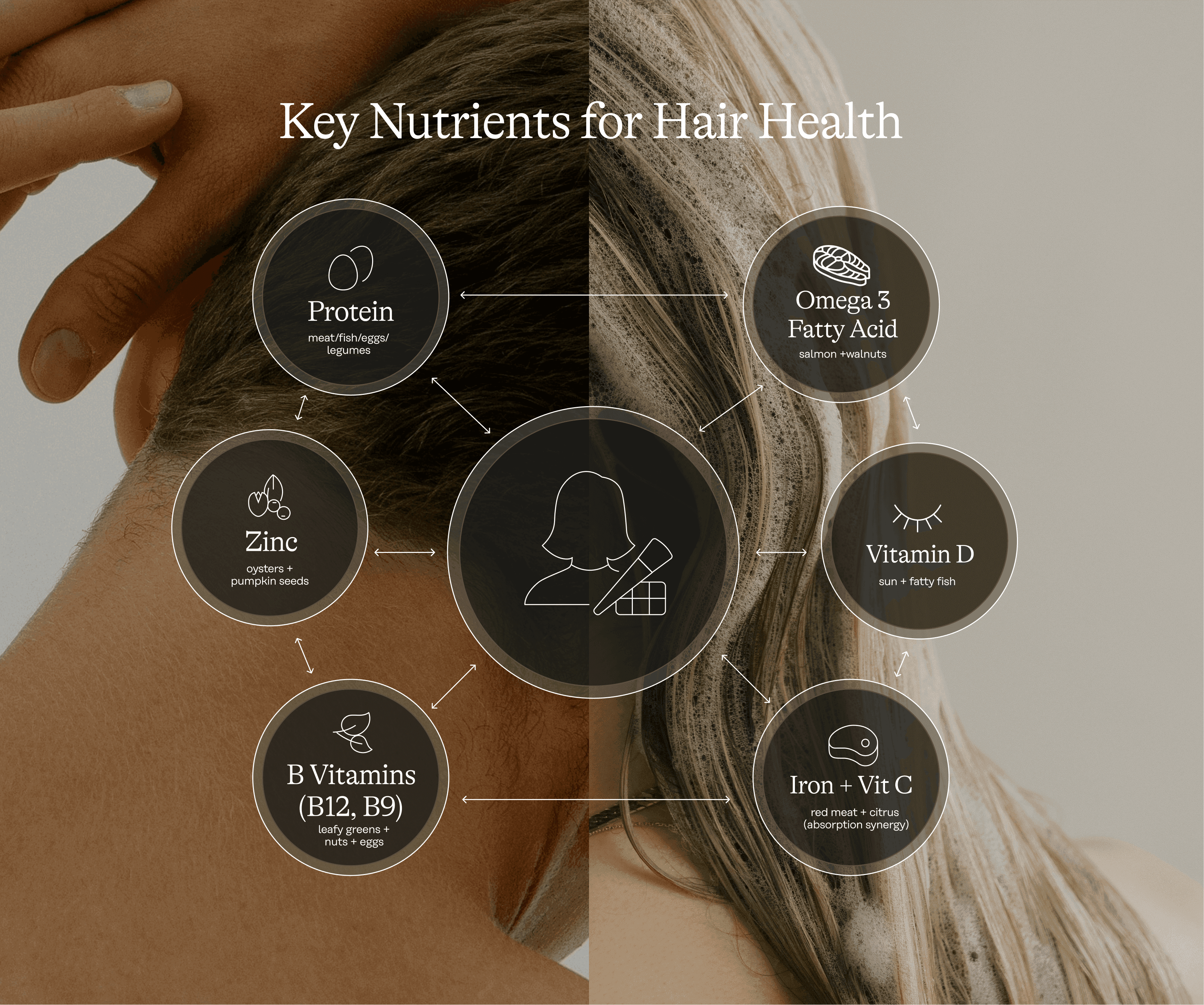
Protein
Hair is composed primarily of keratin, a protein. Insufficient protein intake, particularly in the context of undernutrition, rapid weight loss, or severe restriction, can contribute to disrupting the hair cycle.
Food sources: meat, fish, eggs, legumes, dairy products, tofu, tempeh.
Iron and ferritin
The link between iron status and hair loss is probably one of the most discussed. Several studies suggest that iron deficiency or low ferritin may be associated with certain forms of diffuse hair loss, especially in women, even without frank anemia.
Food sources: red meat, liver, blood sausage, legumes, spinach, chard. The absorption of plant-based iron is improved by vitamin C: citrus fruits, peppers, parsley, kiwi.
Zinc
Zinc is involved in many cellular mechanisms, including protein synthesis. A deficiency may be part of the picture in certain contexts: malabsorption, insufficient intake, restrictive diets.
Sources: oysters, beef, pumpkin seeds, cashews, eggs.
B Vitamins
Vitamins B12 and B9 participate in cellular metabolism. Deficiencies can be found in some people experiencing hair loss, particularly in the context of unsupplemented vegan diets, digestive issues, or prolonged medication use.
Sources: eggs, leafy greens, legumes, nutritional yeast. B12 is mainly provided by animal products.
Vitamin C
Vitamin C is involved in collagen synthesis and has antioxidant properties that may help protect the hair follicle.
Sources: citrus fruits, kiwi, peppers, broccoli, strawberries, parsley, cabbage.
Vitamin D
Low vitamin D levels have been associated with certain forms of alopecia in several studies. This does not mean that a low level alone explains hair loss, but it may be part of the terrain to correct when a deficiency is documented.
Omega-3
Omega-3s have a plausible role in a global terrain approach, particularly through their role in modulating inflammation. Their specific direct effect on hair regrowth is less firmly established than their cardio-metabolic and overall anti-inflammatory benefits.
Dietary supplements do not make hair regrow "by magic." Their value lies primarily in correcting a documented deficiency or supporting a particular terrain when relevant. Random supplementation can be useless or even counterproductive; an excess of certain nutrients can worsen hair loss.
2. Lifestyle: the most underestimated levers
EN_Newsletter Hair loss Part#2_01.png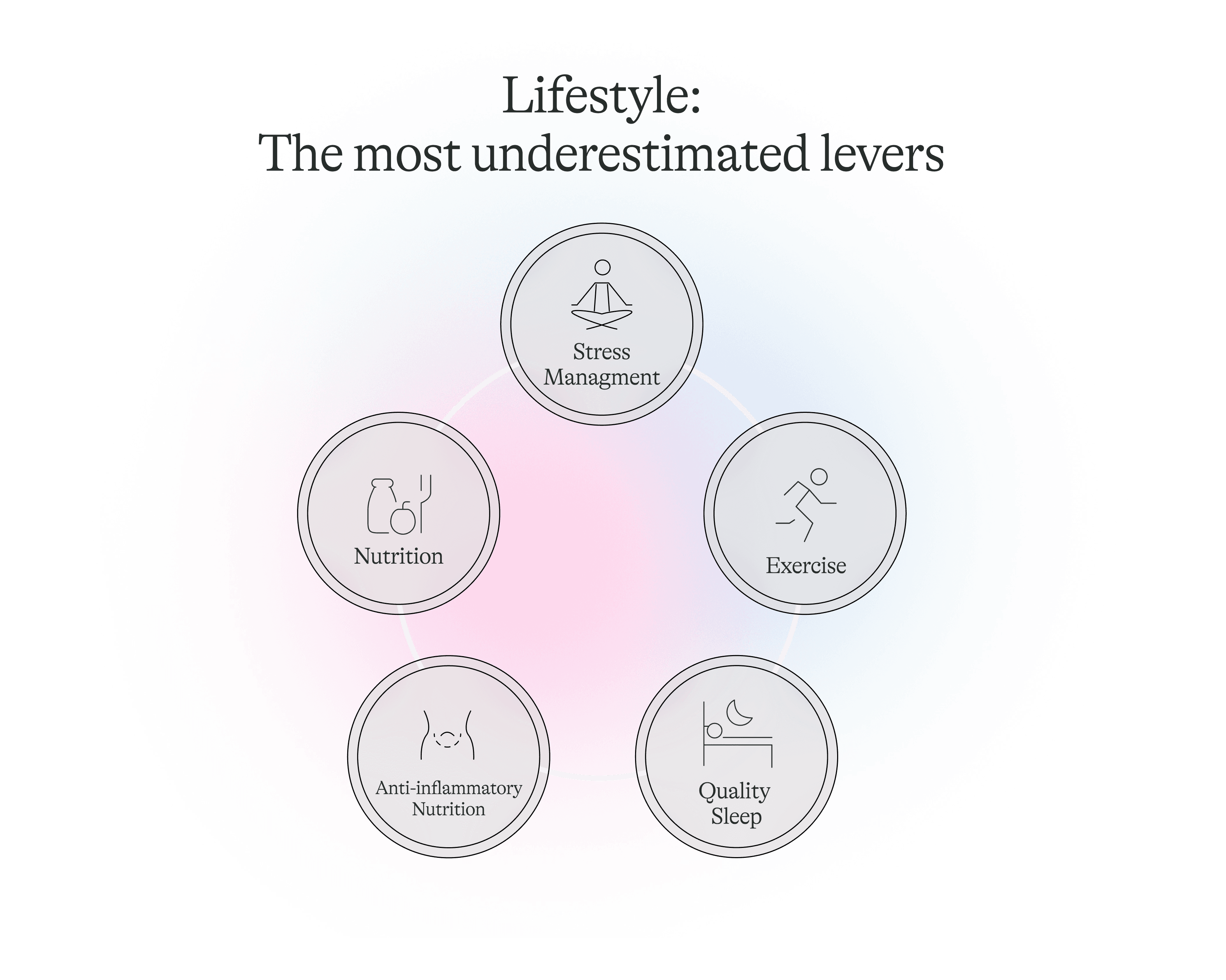
Stress management
Significant stress is a well-described trigger of telogen effluvium. Hair loss is generally not immediate: it often occurs with a delay of several weeks to a few months after the triggering event.
Useful approaches depending on context:
regular, moderate physical activity
meditation, heart rate coherence breathing
cognitive-behavioral therapy
mindfulness practices
walking, nature exposure
yoga, tai chi
Sleep
Poor sleep can be part of a terrain of stress, impaired recovery, and less favorable inflammation, potentially indirectly disrupting the follicle environment and hair cycle quality.
Aiming for 7 to 9 hours of sleep remains relevant for overall health, recovery, and neuroendocrine regulation.
Simple strategies:
regular schedule
natural light in the morning
fewer screens in the evening
cool, dark bedroom
avoid heavy evening meals and late-night eating (last meal 3 hours before bedtime)
moderate caffeine and alcohol
Reducing systemic inflammation
Chronic low-grade inflammation may be part of an unfavorable terrain for hair health, by altering the local follicle environment and combining with other factors such as stress, hormonal or metabolic imbalances. Again, this is more of a contributing terrain than an isolated cause.
Useful habits:
diet rich in vegetables, legumes, fatty fish, olive oil, spices
limiting ultra-processed foods and excess refined sugars
regular physical activity
limiting tobacco and excess alcohol
3. Topical approaches: what the research says
Scalp massage
Some studies suggest that regular scalp massage may influence certain local parameters, with a possible effect on hair thickness. The data remain modest and preliminary, but it is a simple, accessible, and low-risk practice when done gently and well-tolerated.
Microneedling / dermaroller
Microneedling is a technique that involves creating controlled micro-perforations on the scalp surface to locally stimulate certain repair mechanisms and potentially enhance, in some cases, the action of other topical treatments. It has mainly been studied as an adjuvant, particularly in androgenetic alopecia, often in combination with other approaches. The results are encouraging.
At home, caution is essential:
limited depth
strict hygiene
never on an inflamed, injured, or infected scalp
stop if irritation occurs
dermatological advice if in doubt
Scalp health: a terrain not to be neglected
An irritated, inflamed, or imbalanced scalp is not an optimal environment for the follicle. The scalp microbiome is generating growing interest in research today.
In practice, the goal is to maintain a healthy scalp:
cleansing adapted to scalp type
management of dermatitis or psoriasis if present
avoid irritating or overly harsh products
do not neglect persistent signs such as scales, redness, itching, or scalp pain
4. A word about medical treatments
Certain medical treatments are offered in very specific contexts. Topical minoxidil is the most studied treatment for androgenetic alopecia. For female hair loss, the AAD (American Academy of Dermatology) presents it as the most recommended treatment, and 2% or 5% products are approved for this use.
Other options exist depending on the situation: anti-androgen treatments, hormonal approaches, or other targeted dermatological treatments. These options require personalized medical evaluation and are not suitable for all situations.
Your doctor or dermatologist can guide you, especially if the hair loss is:
significant
localized
sudden
scarring
or accompanied by other symptoms
What to remember
Hair loss is multifactorial. A single approach is rarely sufficient.
Blood testing can be a useful starting point to document certain deficiencies or imbalances depending on the context.
Correcting a documented nutritional deficiency can help, especially if it is consistent with the clinical picture.
Lifestyle is not optional. Stress, recovery, nutrition, and inflammation contribute to the overall terrain.
Natural topical approaches may have a place, but with a more limited level of evidence than certain medical treatments.
Regrowth, when possible, often takes several months. Patience and consistency matter.
Some forms of hair loss are more difficult to treat, hence the value of acting early and seeking specialized advice when necessary.
To go further listen to our special episode on hair loss on the Lucis podcast
With Jonathan Encaoua, founder of Oma & Me (a brand specializing in hair health), we decode the real causes of hair loss in both men and women, the myths we still hear everywhere, and the concrete steps to take BEFORE it's too late.
References
The information contained in this article is provided for educational purposes only and does not constitute medical advice. It does not replace consultation with a qualified healthcare professional. In case of significant, sudden, localized, or persistent hair loss, medical or dermatological advice is recommended. Before making any changes to your lifestyle, taking dietary supplements, or starting treatment, consult your physician.
Almohanna HM, Ahmed AA, Tsatalis JP, Tosti A. The Role of Vitamins and Minerals in Hair Loss: A Review. Dermatol Ther (Heidelb). 2019;9(1):51-70.
Evron E, Juhasz M, Babadjouni A, Mesinkovska NA. Natural Hair Supplement: Friend or Foe? Saw Palmetto, a Systematic Review in Alopecia. Skin Appendage Disord. 2020;6(6):329-337.
Panahi Y, Taghizadeh M, Marzony ET, Sahebkar A. Rosemary oil vs minoxidil 2% for the treatment of androgenetic alopecia: a randomized comparative trial. Skinmed. 2015;13(1):15-21.
Peters EMJ, Muller Y, Snaga W, et al. Hair and stress: A pilgrimage through hair follicle neuroimmunology. Biochem Pharmacol. 2022;201:115073.
Phillips TG, Slomiany WP, Allison R. Hair Loss: Common Causes and Treatment. Am Fam Physician. 2017;96(6):371-378.
Trost LB, Bergfeld WF, Calogeras E. The diagnosis and treatment of iron deficiency and its potential relationship to hair loss. J Am Acad Dermatol. 2006;54(5):824-844.
Written by Anaïs Gautron
More insights, straight to your inbox.
New articles on biomarkers, performance, and wellness. No noise, just substance.