Wired at night, wrecked by day
When your cortisol rhythm is off
110 biomarkers tested · 450 labs in Europe
Test my Stress ResponseSounds familiar ?
Even if it can seem normal, these needs to be looked at
You're wired at night and exhausted in the morning. I'm exhausted all day but can't fall asleep at night. I wake up at 3am with my mind racing, then drag through the morning on coffee.
Signals we commonly see when measuring
Your pattern, at a glance
HRV consistently below 40 · Sleep efficiency under 75% · Wake episodes 4-6x per night
Chronic stress · Disrupted sleep-wake cycle
CAR ↑ · DHEA-S ↓ · Glucose ↑ · CRP ↑

How blood testing brings clarity
Your stress hormones have lost their natural daily rhythm. Blood tests can measure cortisol levels and DHEA-S to understand your stress response pattern.
How it works
Measure your body systems
Through a comprehensive blood draw in one of our partner labs, we measure 60+ to 110+ biomarkers across body systems and reveal exactly where you stand for each

Get personalized actions
Your biomarkers unlock a personalized protocol with evidence-based actions tailored to your exact health data for measurable outcomes
Improve and re-test
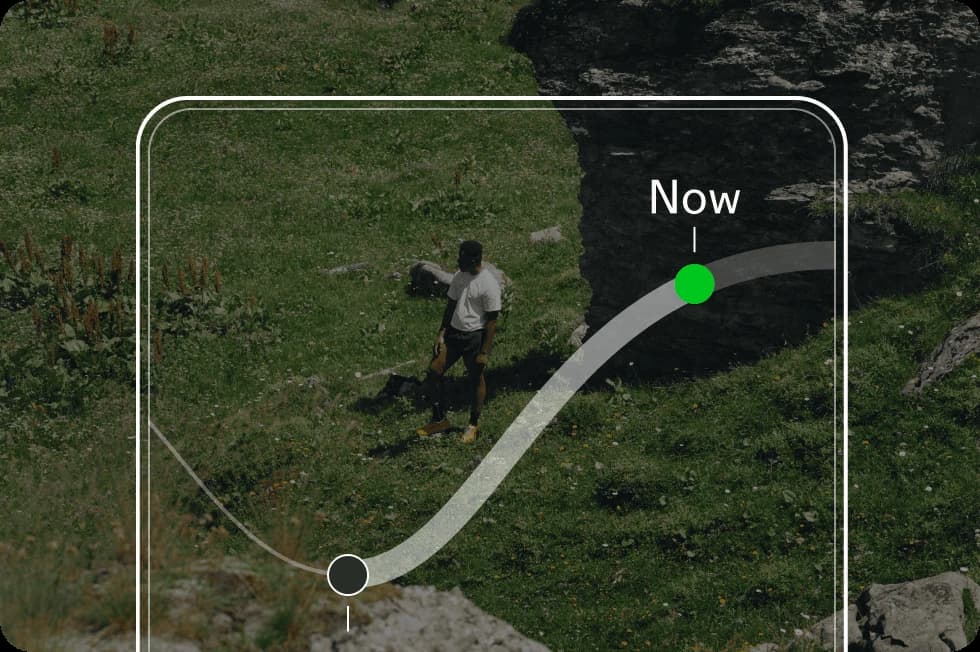
Track then retest within 3-6 months to validate your progress, see which actions worked, and continuously optimize your health for better healthspan
Whats happening biologically
Your stress hormones have lost their natural rhythm. Instead of peaking in the morning and declining at night, cortisol stays elevated when you should be winding down and crashes when you need energy. Blood tests capture this disrupted pattern, revealing why you're exhausted all day but can't fall asleep at night.
CAR (Cortisol Awakening Response): Your morning metabolic engine
CAR measures how your cortisol rises in the first 30-60 minutes after waking. Normally, cortisol should surge in the morning, giving you energy and alertness. It's your body's natural alarm clock and metabolic accelerator. When chronic stress disrupts your sleep-wake cycle, this morning surge blunts or disappears. You wake up feeling like you never slept.
When CAR becomes abnormal, it shows your stress response system has lost its rhythm. You're running on fumes in the morning, then cortisol spikes at 3am when you should be sleeping. Your body is responding to stress signals at the wrong times. Meanwhile, DHEA-S (your resilience hormone) drops, leaving you without the buffer to handle stress effectively. This creates a vicious cycle: poor sleep, disrupted hormones, more stress, worse sleep.
Key insight: Chronic stress doesn't just make you feel stressed. It rewires your hormonal rhythms. Your body is producing the same hormones, but at the wrong times. This is why you feel wired at night and wrecked by day, no matter how much you try to rest.
Bottom line: Stress hormone balance reveals how your daily cortisol rhythm, resilience reserves, glucose control, and inflammation are interconnected. At Lucis, we measure CAR, DHEA-S, glucose, and CRP. Not just whether your cortisol is high or low, but whether your rhythm supports energy when you need it and rest when you don't.
Learn about your biology with Lucis
Test 110+ biomarkers and get a 360° understanding of your body








Lucis newsletter
Curated knowledge, delivered weekly
Our experts make biology simple across 20+ topics.