Fertility 2/2: Understanding female fertility and taking Action
Understanding the factors and levers to optimize female fertility
Table of contents
This is Part 2 of our 2-part series on fertility. In Part 1, we explored male fertility with the same approach.
Female fertility is multifactorial.
It depends on ovulation, egg quality, hormonal balance, thyroid function, metabolism, inflammation, nutritional status, and environment. Infertility is defined as the absence of pregnancy after 12 months of regular unprotected intercourse, or after 6 months from age 35 onward. Globally, around 1 in 6 people are affected during their reproductive years.
Broadly speaking, there are two major categories of causes.
On one side, there are medical or structural causes that require specialized care: endometriosis, polycystic ovary syndrome (PCOS), primary ovarian insufficiency, tubal disease, fibroids, uterine abnormalities, or certain autoimmune situations. Evaluating these causes is part of the medical fertility workup.
On the other side, there are modifiable lifestyle and environment-related factors: hormonal imbalances, insulin resistance, chronic inflammation, stress, nutritional deficiencies, or exposure to certain endocrine disruptors.
This article focuses on those actionable levers. Because supporting biological terrain is an essential part of preconception care.
We will explore what can affect female fertility and which concrete changes can be put in place starting today.
One important point to keep in mind: follicular environment and metabolic terrain do not change in just a few days. However, they can evolve over the course of months when inflammation, metabolism, sleep, stress, and nutritional deficiencies are addressed in a targeted way. That is one reason why preconception is best thought of over several months rather than at the last minute.
The main factors that can impair female fertility
fertilit 2 FR_1-1.png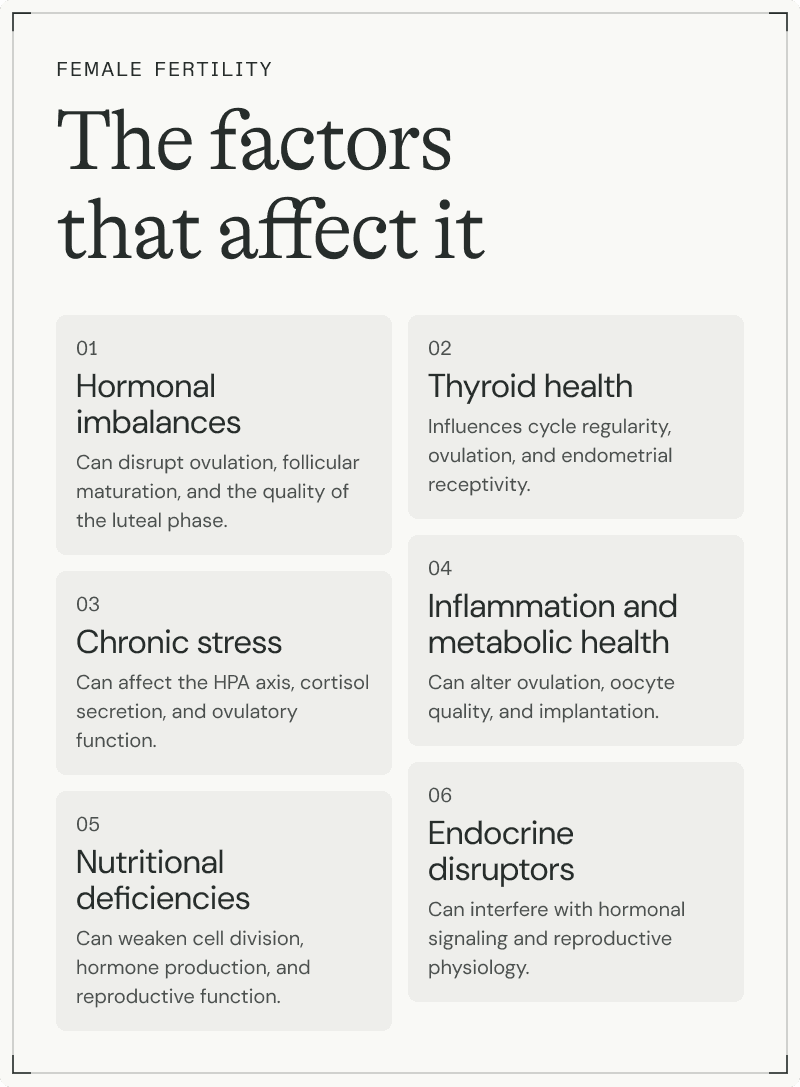
1. Hormonal imbalances
Female fertility depends on finely tuned hormonal orchestration, regulated by the hypothalamic-pituitary-ovarian axis. When even one component is off balance, the entire cycle can be affected: ovulation may be delayed, absent, or followed by an insufficient luteal phase.
FSH and LH: the conductors of the cycle
FSH supports follicular growth.
LH helps trigger ovulation.
An imbalance between the two can be associated with irregular cycles or anovulation.
Estradiol: the signal for follicular growth and endometrial preparation
Produced by growing follicles, estradiol supports endometrial development and contributes to overall cycle quality.
Estradiol that is too low, too high at the wrong time, or poorly synchronized with the rest of the cycle can compromise ovulation and endometrial receptivity.
Progesterone: support for the luteal phase
Produced after ovulation, progesterone helps transform the endometrium and supports early pregnancy.
Low progesterone can be associated with a lower-quality luteal phase.
AMH: a reflection of ovarian reserve, not a summary of fertility
AMH mainly reflects the relative number of small follicles present.
It provides information about ovarian reserve, but does not by itself predict natural fertility or egg quality.
Androgens (testosterone, DHEA-S)
When elevated, they can disrupt follicular maturation and ovulation.
Hyperandrogenism is common in PCOS, often in a context of insulin resistance.
SHBG
Low SHBG increases the free fraction of androgens.
This can contribute to a less favorable terrain for ovulation.
Prolactin
Elevated prolactin can interfere with GnRH secretion and therefore with ovulation.
Causes are multiple: stress, medications, hypothyroidism, or sometimes pituitary pathology.
2. The thyroid
The thyroid plays a central role in female fertility.
Thyroid hormones are involved in regulating the metabolism of the entire body, including the ovaries and the endometrium. Thyroid abnormalities, even sometimes mild ones, can be associated with irregular cycles, ovulatory disorders, or implantation difficulties depending on the context.
Why this axis matters:
thyroid receptors are present in reproductive tissues
the thyroid interacts with prolactin, metabolism, and more broadly with ovarian function
overt hypothyroidism can clearly impair fertility
Biomarkers to assess: TSH, free T4, free T3, and depending on the context, thyroid antibodies.
3. Chronic stress
Chronic stress has a real biological impact on reproductive function.
When it becomes persistent, it activates the hypothalamic-pituitary-adrenal axis and alters cortisol secretion. This can disrupt ovulation regulation, shorten the luteal phase in some women, and influence sleep, inflammation, blood sugar, and the overall preconception environment.
Stress does not explain everything, and it should not become a catch-all explanation. But it can clearly weigh on an already fragile terrain.
Biomarkers to assess: cortisol, DHEA-S.
4. Inflammation and metabolic terrain
Low-grade chronic inflammation and insulin resistance are among the most underestimated barriers to female fertility. They can disrupt ovulation, alter the follicular environment, affect egg quality, and compromise implantation.
Insulin resistance
Insulin resistance is common in PCOS. It promotes hyperinsulinemia, which stimulates ovarian androgen production and lowers SHBG, thereby increasing the proportion of free androgens. This mechanism can disrupt follicular maturation and promote anovulation.
Chronic inflammation
Low-grade systemic inflammation can influence:
oxidative stress
the follicular environment
endometrial receptivity
implantation
High-sensitivity CRP can help objectify part of this inflammatory terrain.
Metabolic health and fertility
Higher body weight can be associated with poorer ovulatory quality, insulin resistance, and chronic inflammation. Conversely, low body weight or energy deficiency can also suppress the hypothalamic-pituitary axis and block ovulation. The goal is therefore not a rigid "ideal weight," but a metabolic state stable enough to support ovarian function.
Biomarkers to assess: high-sensitivity CRP, fasting glucose, HbA1c, lipid panel, fasting insulin.
5. Nutritional deficiencies
Egg development depends on adequate nutrient availability. Nutritional deficiencies can weaken follicular maturation, ovulation, endometrial quality, and overall metabolic terrain.
Vitamin D
involved in immunity, inflammation, and reproductive function
Folate (B9) and vitamin B12
essential for cell division, DNA synthesis, and methylation
particularly important in preconception
homocysteine can serve as a useful indirect marker when elevated
Ferritin
an indicator of iron stores
insufficient iron status can weaken cellular energy and overall terrain
Magnesium
involved in numerous enzymatic reactions
contributes to glycemic balance, stress regulation, and sleep quality
Omega-3s
support inflammatory balance
contribute to overall cellular health
Zinc
involved in cell division, hormonal function, and egg quality
6. The daily environment
We are exposed every day to many chemical substances through food, cosmetics, household products, textiles, and indoor air.
Some of these molecules, called endocrine disruptors, can interfere with the hormonal system by mimicking, blocking, or altering the action of natural hormones. Current data support the value of reducing toxic load during preconception, even though not all exposures can realistically be eliminated.
Main exposures to consider include:
BPA: food plastics, cans, receipt paper
phthalates: synthetic fragrances, cosmetics, packaging, textiles
pesticides: especially through some non-organic foods
PFAS: non-stick coatings, packaging, some textiles and cosmetics
Other equally important exposures:
tobacco
alcohol
cannabis and other drugs
indoor air pollution
Actionable levers
The metabolic and follicular environment can evolve in the months ahead when targeted actions are taken.
fertilit 2 FR_2-1.png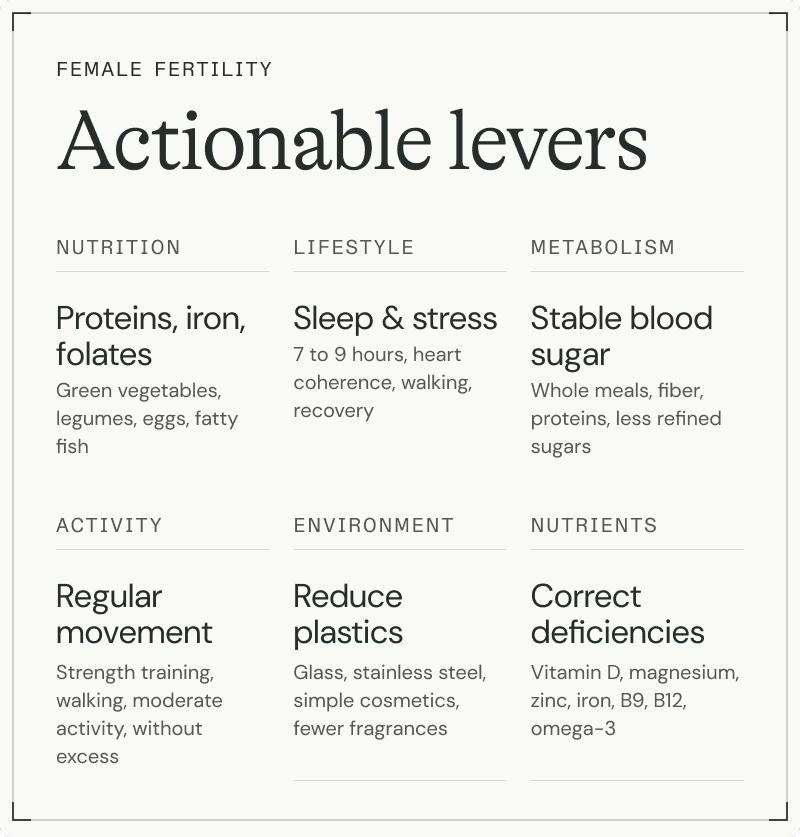
1. Nutrition: supporting ovulation and egg quality
Nutrition directly influences inflammation, insulin sensitivity, hormonal balance, and the quality of preconception terrain.
Prioritize:
quality proteins: eggs, fatty fish, good-quality poultry, red meat in appropriate amounts, yogurt or skyr, tofu, tempeh, legumes
a variety of vegetables, especially cruciferous vegetables: broccoli, cauliflower, kale, Brussels sprouts, arugula, radishes, as well as colorful vegetables such as bell peppers, carrots, beets, squash, spinach
antioxidant-rich foods: berries, blueberries, raspberries, blackberries, pomegranate, citrus fruits, kiwi, parsley, cilantro, raw cacao, green tea, spices such as turmeric and ginger
healthy fats: extra virgin olive oil, avocado, walnuts, almonds, hazelnuts, chia seeds, ground flaxseeds, pumpkin seeds, fatty fish such as sardines, mackerel, salmon
sources of folate and iron: leafy greens, lentils, chickpeas, kidney beans, asparagus, avocado for folate; red meat, lentils, white beans, spinach for iron, ideally paired with a source of vitamin C to improve absorption
Key principles:
stabilize blood sugar
reduce ultra-processed foods
support inflammatory balance
ensure sufficient nutrient density
Limit:
refined sugars
excess caffeine
highly processed foods
Avoid entirely:
alcohol
2. Lifestyle: optimizing hormonal terrain
Healthy weight
The goal is not a rigid standard, but metabolic balance. Moderate improvement in metabolic terrain can already make a difference in some women, especially in cases of anovulation linked to PCOS. Conversely, energy deficiency or being underweight can also compromise ovulation.
Physical activity
Regular, moderate physical activity supports insulin sensitivity, reduces inflammation, improves body composition, and promotes better hormonal balance.
In practice:
aim for moderate, regular activity spread across the week
ideally add 2 to 3 strength training sessions per week
include daily walking, especially after meals if blood sugar is an issue
watch for signs of excess: persistent fatigue, poorer sleep, lower libido, more irregular cycles, or the sense of constantly "pushing through"
Sleep
Sleep plays a central role in hormonal regulation, cortisol, blood sugar, appetite, and overall recovery. Insufficient or irregular sleep can weaken the HPA axis, impair insulin sensitivity, and disrupt hormonal terrain.
Leptin and ghrelin, which are involved in regulating hunger, satiety, and energy balance, are also influenced by sleep quality.
In practice:
aim for 7 to 9 hours of sleep per night
keep bedtimes and wake times as regular as possible
limit screens, intense mental work, and bright light stimulation in the hour before bed
keep the bedroom dark, quiet, and cool, ideally around 18 to 20°C
avoid caffeine too late in the day, especially after early afternoon if sleep is fragile
get daylight exposure in the morning to better anchor circadian rhythm
Stress management
Chronic stress can disrupt ovulation, sleep, blood sugar, inflammation, and the overall quality of preconception terrain. The goal is not to "eliminate" all stress, but to reduce chronic load and improve recovery capacity.
In practice:
practice 5 minutes of coherent breathing, 2 to 3 times per day if it feels appropriate
include 10 to 20 minutes of meditation, guided breathing, or disconnection time several times per week
use yoga, gentle stretching, or mobility work as regulation tools
aim for 20 to 30 minutes of outdoor walking per day when possible
protect real mental recovery time, without screens, stimulation, or constant productivity
3. Reducing endocrine disruptors
It is impossible to eliminate exposure entirely, but it is realistic to reduce the overall load.
Kitchen
replace plastic as much as possible with glass, stainless steel, or ceramic
avoid heating food in plastic
wash fruits and vegetables
filter water if possible
Bathroom and personal care
choose simple, lightly fragranced products
limit products containing parabens, phthalates, or synthetic fragrances
choose fragrance-free menstrual products
Home
avoid damaged non-stick coatings whenever possible
use simple household cleaning products
limit air fresheners, sprays, and scented candles
ventilate daily to reduce exposure to volatile organic compounds
vacuum regularly, ideally with a HEPA filter, since some household pollutants accumulate in dust
In summary
Female fertility depends on multiple interconnected factors: sex hormones, thyroid, metabolism, inflammation, stress, nutrition, and environment.
The good news is that some of these levers are modifiable. Concrete changes can help support:
cycle regularity
ovulation
the metabolic and follicular environment
endometrial receptivity
At Lucis, we analyze more than 40 fertility-related biomarkers: sex hormones, thyroid function, inflammation, glucose, HbA1c, lipid profile, key micronutrients, and other relevant indicators depending on the context.
Because supporting your biological terrain for conception often starts with better understanding it.
References
The information provided in this article is for educational purposes only and does not substitute medical advice, diagnosis, or treatment. Consult a qualified healthcare professional for personalized care.
American Society for Reproductive Medicine. Fertility evaluation of infertile women: a committee opinion. Fertility and Sterility. 2021.
Chavarro JE, Rich-Edwards JW, Rosner BA, Willett WC. Iron intake and risk of ovulatory infertility. Obstetrics & Gynecology. 2006;108(5):1145-1152.
Gore AC, Chappell VA, Fenton SE, et al. EDC-2: The Endocrine Society's second scientific statement on endocrine-disrupting chemicals. Endocrine Reviews. 2015;36(6):E1-E150.
Joseph DN, Whirledge S. Stress and the HPA axis: balancing homeostasis and fertility. International Journal of Molecular Sciences. 2017;18(10):2224.
Mazzilli R, Medenica S, Di Tommaso AM, et al. The role of thyroid function in female and male infertility: a narrative review. Journal of Endocrinological Investigation. 2023;46(1):15-26.
Nasiadek M, Stragierowicz J, Klimczak M, Kilanowicz A. The role of zinc in selected female reproductive system disorders. Nutrients. 2020;12(8):2464.
Steiner AZ, Jukic AMZ. Impact of female age and nulligravidity on fecundity in an older reproductive age cohort. Fertility and Sterility. 2016;105(6):1584-1588.e1.
Unuane D, Velkeniers B. Impact of thyroid disease on fertility and assisted conception. Best Practice & Research Clinical Endocrinology & Metabolism. 2020;34(4):101378.
Várbíró S, Takács I, Tűű L, et al. Effects of vitamin D on fertility, pregnancy and polycystic ovary syndrome, a review. Nutrients. 2022;14(8):1649.
Walker MH, Tobler KJ. Female infertility. StatPearls Publishing. 2022.
World Health Organization. 1 in 6 people globally affected by infertility. 2023.
Written by Anaïs Gautron
More insights, straight to your inbox.
New articles on biomarkers, performance, and wellness. No noise, just substance.