Mental Health 2/2: Concrete Steps to Better Support Yourself
6 actionable pillars to support your mental balance
Table of contents
In part one of this series, we explored why mental health isn't just "in your head" and how inflammation, sleep, metabolism, or certain nutritional deficiencies can undermine psychological balance.
In this second part, we look at what you can actually do about it. Because if mental health has a biological dimension, it also means you can act upstream to create the best possible conditions for your balance.
EN_Newsleter_MentalHealth_#102.png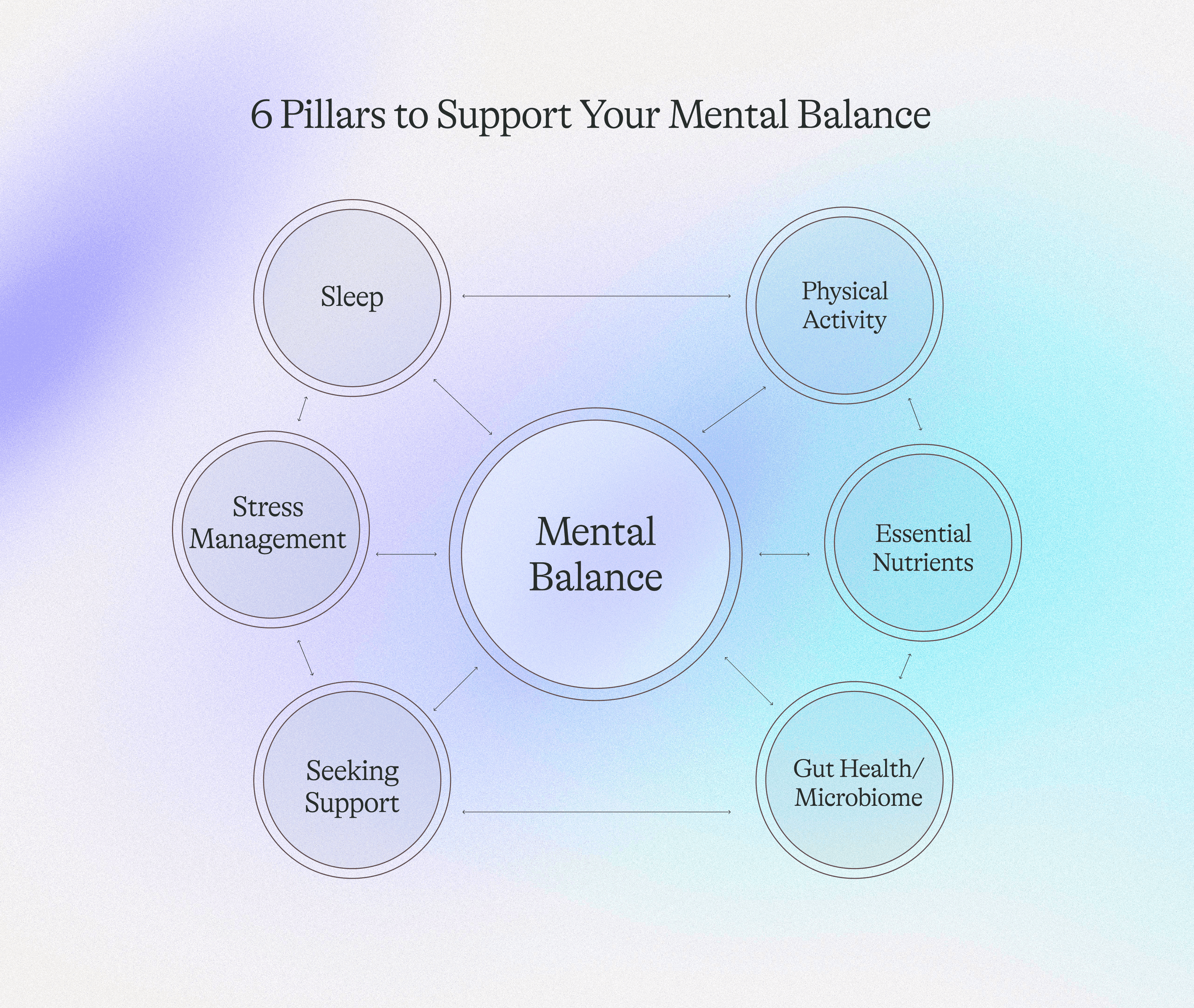
1. Sleep: A Pillar of Emotional Regulation
Sleep contributes to emotional regulation, brain recovery, and the proper functioning of many systems involved in mental balance. When it's insufficient or fragmented, everything else suffers: mood, stress tolerance, concentration, energy.
What you can observe:
You take more than 30 minutes to fall asleep
You wake up several times during the night
You wake up tired even after 7-8 hours of sleep
What you can adjust:
Set regular bedtime and wake times, including weekends
Expose yourself to natural light in the morning
Avoid screens 1-2 hours before bed
Keep your bedroom cool (18-19 C), dark, and quiet
Eliminate caffeine after 2pm, limit alcohol in the evening
2. Essential Nutrients for the Brain
Your brain needs certain cofactors to make its neurotransmitters: serotonin, dopamine, GABA, norepinephrine.
EN_Newsleter_MentalHealth_#2.png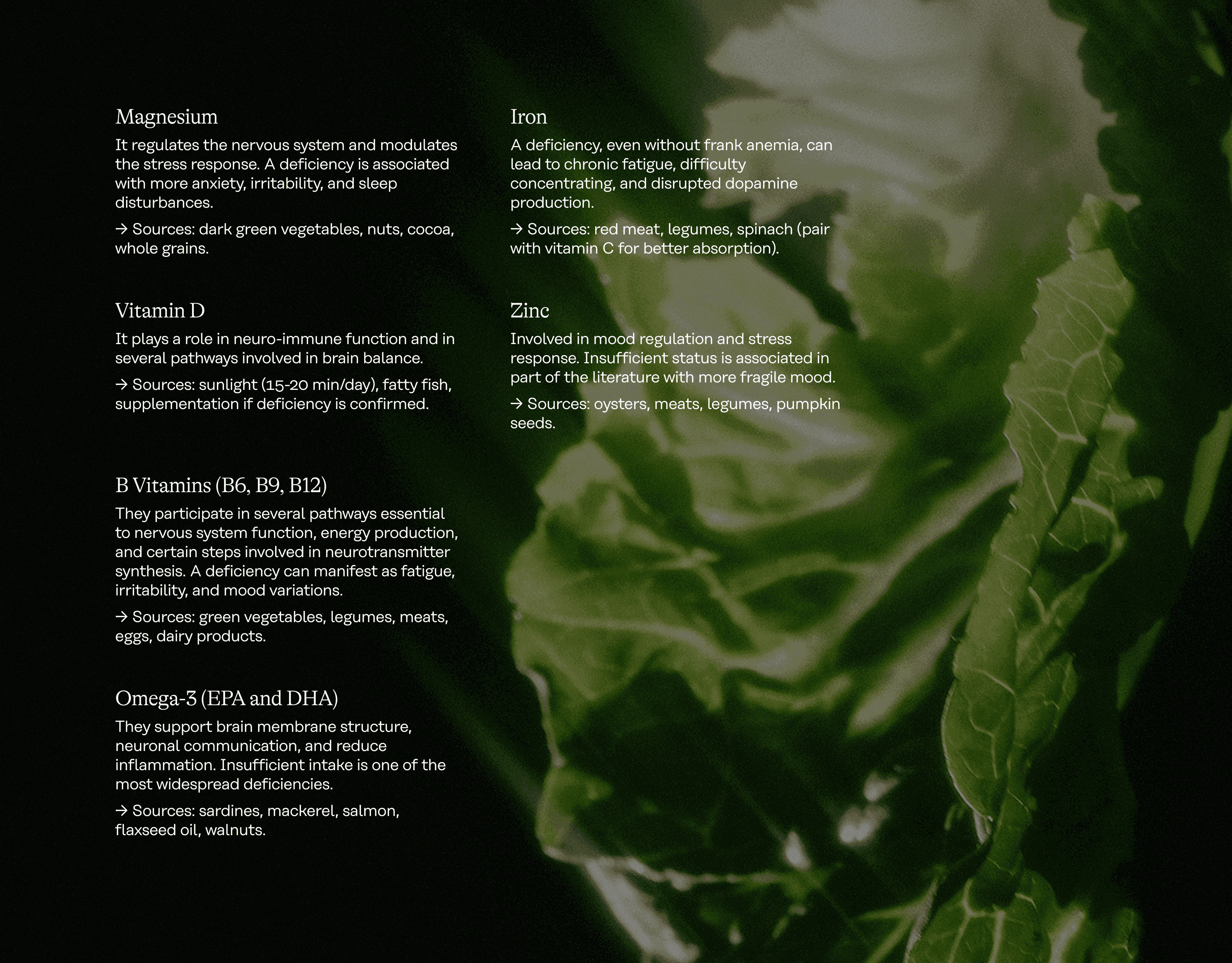
Magnesium: Regulates the nervous system and modulates the stress response. Sources: dark green vegetables, nuts, cocoa, whole grains.
Vitamin D: Plays a role in neuro-immune function and brain balance. Sources: sunlight (15-20 min/day), fatty fish.
B Vitamins (B6, B9, B12): Essential for nervous system function, energy production, and neurotransmitter synthesis. Sources: green vegetables, legumes, meats, eggs, dairy.
Omega-3 (EPA and DHA): Support brain membrane structure and reduce inflammation. Sources: sardines, mackerel, salmon, flaxseed oil, walnuts.
Iron: A deficiency can lead to chronic fatigue and disrupted dopamine production. Sources: red meat, legumes, spinach (pair with vitamin C).
Zinc: Involved in mood regulation and stress response. Sources: oysters, meats, legumes, pumpkin seeds.
3. Physical Activity: A Natural Antidepressant
Physical activity supports mental health through improved sleep, reduced inflammation, better stress regulation, and positive effects on mood. Regularity matters much more than intensity.
4. The Gut-Brain Axis: Taking Care of Your Microbiome
The microbiome, immunity, certain neural pathways, and metabolites produced in the gut appear to influence mood, stress, and sleep. Increase prebiotic fibers, consume fermented foods, limit ultra-processed foods, and reduce chronic stress.
5. Managing Chronic Stress
Chronic stress exhausts the nervous system, dysregulates cortisol, and undermines balance.
Heart Coherence Breathing: 5 minutes, 3 times per day. Mindfulness: 10-20 minutes of guided meditation. Recovery Time: regular breaks. Social Connection: talk, share, don't stay alone.
6. Seeking Support
These levers can improve your biological terrain. But they don't replace professional support when it's needed.
When to consult?
Consult if your symptoms persist and disrupt your daily life, you feel persistent sadness or loss of interest, you have intrusive thoughts or anxiety that's hard to control, you're isolating yourself, or you're going through a difficult life event.
Asking for help isn't failing. It's taking care of yourself with the right tools, at the right time.
What Lucis Can Offer You
At Lucis, we analyze over 110 biomarkers: hs-CRP (inflammation), fasting glucose, insulin, HbA1c (glucose metabolism), vitamin D, B12, folate, iron, ferritin, magnesium, zinc (nutritional status), cortisol awakening response (stress), TSH, T3, T4 (thyroid).
Mental health deserves the same attention as your cardiovascular or metabolic health.
To go further: a special mental health episode with MindDay
Together with Boris, co-founder of MindDay, we deconstruct the myths around mental health and share concrete tools.
Disclaimer
The information contained in this newsletter is provided for educational purposes only and does not constitute medical advice, diagnosis, or treatment. If you are in psychological distress or concerned about yourself or someone else, contact a healthcare professional immediately.
References
Noetel M, et al. Effect of exercise for depression: systematic review and network meta-analysis. BMJ. 2024.
Li Z, et al. Meta-analysis on sleep quality improvement and depression/anxiety. 2025.
Moabedi M, et al. Magnesium and depression: systematic review and meta-analysis. Frontiers in Psychiatry. 2023.
Holt-Lunstad J. Social connection and health: evidence and future implications. World Psychiatry. 2024.
CANMAT guidelines for major depressive disorder. Canadian Journal of Psychiatry. 2023.
Loh JS, et al. Microbiota–gut–brain axis and its therapeutic applications. Signal Transduction and Targeted Therapy. 2024.
Inserm. Cohérence cardiaque — analyse des données scientifiques. 2022.
Written by Anaïs Gautron
More insights, straight to your inbox.
New articles on biomarkers, performance, and wellness. No noise, just substance.