Weekend drinks, Monday fog
How alcohol quietly disrupts your metabolic balance
Sounds familiar ?
Even if it can seem normal, these needs to be looked at
Your social life is shifting your metabolic balance. I'm doing all the right things-staying active, eating well most days-but I crash after meals and my clothes fit differently.
Signals we commonly see when measuring
Your pattern, at a glance
Sleep averaging 6h 15min
Dining out 4-5x/week, wine most nights
HbA1c ↑ · Triglycerides ↑ · HDL ↓ · Glucose ↑

How it works
Measure your body systems
Through a comprehensive blood draw in one of our partner labs, we measure 60+ to 110+ biomarkers across body systems and reveal exactly where you stand for each
Get personalized actions
Your biomarkers unlock a personalized protocol with evidence-based actions tailored to your exact health data for measurable outcomes
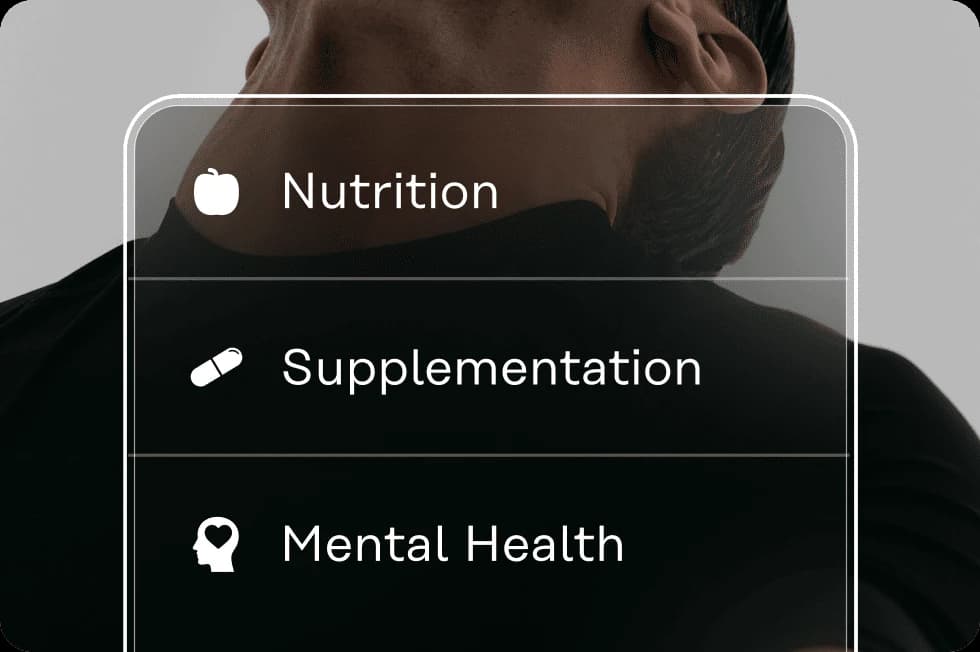
Improve and re-test
Track then retest within 3-6 months to validate your progress, see which actions worked, and continuously optimize your health for better healthspan

Whats happening biologically
Your weekend habits are writing checks your weekday metabolism can't cash. Restaurant meals deliver concentrated sodium, oils, and refined carbs while alcohol disrupts your liver's normal fuel management. Your body is adapting to these repeated surges in ways that show up in your blood long before you feel different.
HbA1c: Your 3-month glucose memory
HbA1c measures how much glucose sticks to your red blood cells over three months. Think of it like a flight recorder for your metabolism. Not just a snapshot from one morning, but the full story of every meal, every drink, every late night. When you dine out frequently with wine most nights, your glucose spikes repeatedly. These spikes add up over time, even if your fasting glucose looks perfectly normal.
When HbA1c climbs into borderline territory, it shows your average glucose is creeping up. Your body is spending more time in elevated glucose states. This happens silently, before you feel symptoms. Your cells are bathing in slightly more sugar than optimal, day after day. It's like running your engine hotter than designed. Everything still works, but the wear accelerates.
Key insight: You can have normal fasting glucose but rising HbA1c. The pattern matters more than single measurements. Your weekend habits create a cumulative metabolic shift your body can't ignore, no matter how good you are Monday through Thursday.
Bottom line: Social patterns reveal how your glucose regulation, lipid metabolism, and liver function adapt to repeated metabolic stress. At Lucis, we measure HbA1c, triglycerides, HDL, and fasting glucose together. Not just whether you're in range, but whether your lifestyle is creating metabolic momentum in the right direction.