Sounds familiar ?
Even if it can seem normal, these needs to be looked at
Your fatigue has a name: low iron. I'm exhausted by mid-afternoon no matter how much I sleep. Exercise feels impossible, my hands are always cold.
Signals we commonly see when measuring
Your pattern, at a glance
Resting heart rate elevated (+12 bpm vs baseline)
Heavy menstrual periods · Plant-based diet without iron support
Ferritin ↓ · Iron ↓ · Hemoglobin ↓ · Transferrin saturation ↓

How it works
Measure your body systems
Through a comprehensive blood draw in one of our partner labs, we measure 60+ to 110+ biomarkers across body systems and reveal exactly where you stand for each
Get personalized actions
Your biomarkers unlock a personalized protocol with evidence-based actions tailored to your exact health data for measurable outcomes
Improve and re-test
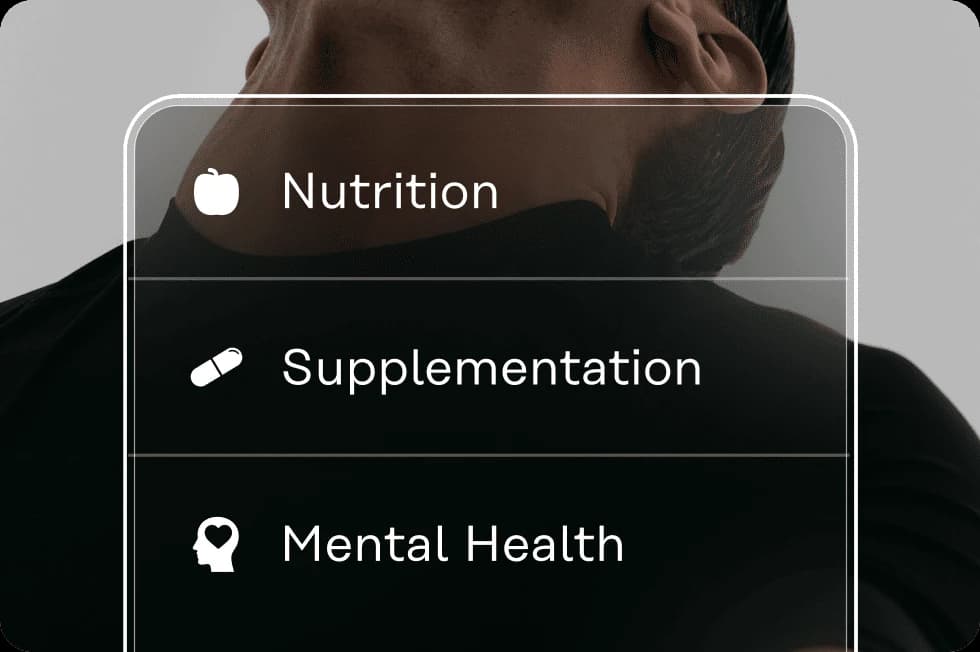
Track then retest within 3-6 months to validate your progress, see which actions worked, and continuously optimize your health for better healthspan

Whats happening biologically
Your fatigue isn't in your head. It's in your blood. Heavy menstrual periods create ongoing iron loss that a plant-based diet struggles to replace. Each month, you're running a deficit that drains your oxygen transport system, forcing every cell in your body to produce energy less efficiently.
Ferritin: Your iron storage reserve
Ferritin is your iron storage protein, primarily in your liver, bone marrow, and spleen. Think of it like your iron savings account. When heavy periods withdraw more iron than your diet deposits, ferritin drops first. Your body draws from storage to maintain normal hemoglobin, keeping your blood counts looking okay while your reserves silently empty.
When ferritin drops into low territory, your bone marrow doesn't have readily accessible iron to incorporate into new red blood cells. You're making blood cells with less hemoglobin, reducing their oxygen-carrying capacity. Meanwhile, your body prioritizes critical functions. Hair, nails, and temperature regulation get deprioritized so your brain and heart can maintain oxygen delivery. This is why cold hands, brittle nails, and exhaustion appear long before anemia shows up on standard blood tests.
Key insight: You can have normal hemoglobin and feel terrible. Ferritin depletion impacts energy, cognition, temperature regulation, and exercise capacity months before anemia appears. Your body is compensating successfully, but the effort required keeps increasing.
Bottom line: Iron status reveals how well your storage reserves, transport capacity, and oxygen delivery systems work together. At Lucis, we measure ferritin, serum iron, hemoglobin, and transferrin saturation. Not just whether you're anemic, but whether your iron status is optimized for energy, focus, and performance.