Unpredictable cycles, unexplained breakouts
What your hormones are trying to tell you
Sounds familiar ?
Even if it can seem normal, these needs to be looked at
Irregular cycles and stubborn metabolic changes. My period shows up whenever it wants or not at all. I'm gaining weight despite eating healthy, my skin is breaking out.
Signals we commonly see when measuring
Your pattern, at a glance
Cycle length varying 28-45 days (tracker)
Weight gain around midsection (+4 kg in 6 months) · Acne and excess hair growth
Testosterone ↑ · DHEA-S ↑ · LH ↑ · LH:FSH ratio ↑ · SHBG ↓ · Insulin ↑

How it works
Measure your body systems
Through a comprehensive blood draw in one of our partner labs, we measure 60+ to 110+ biomarkers across body systems and reveal exactly where you stand for each
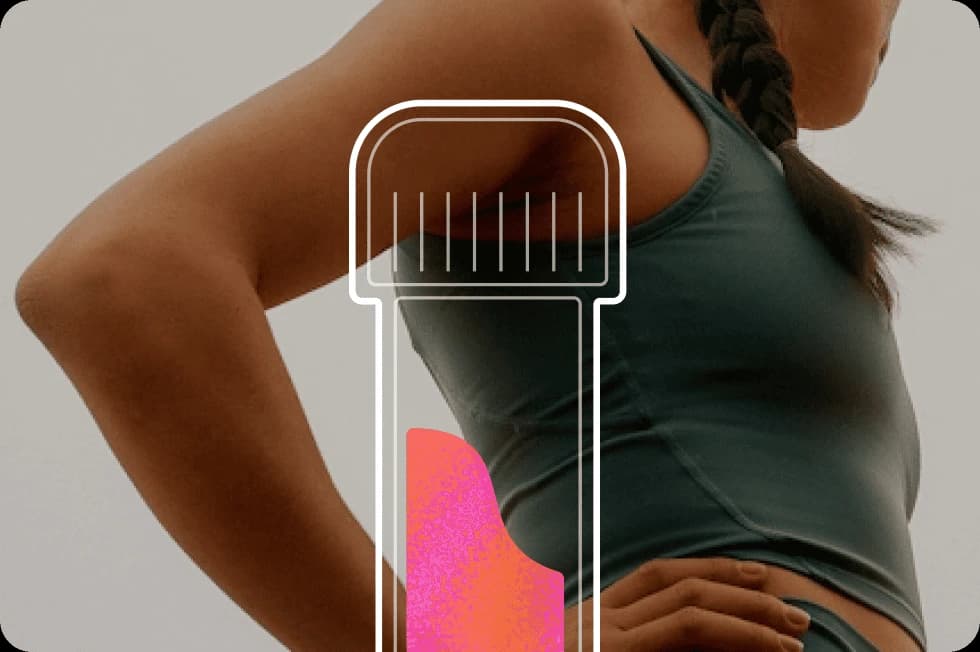
Get personalized actions
Your biomarkers unlock a personalized protocol with evidence-based actions tailored to your exact health data for measurable outcomes
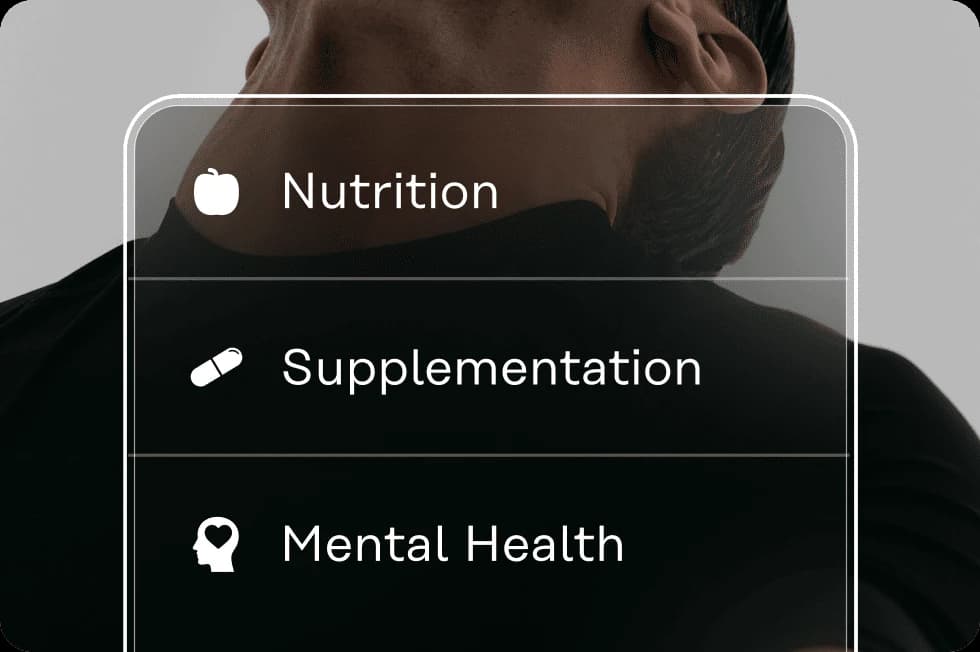
Improve and re-test
Track then retest within 3-6 months to validate your progress, see which actions worked, and continuously optimize your health for better healthspan

Whats happening biologically
When insulin sensitivity decreases, it sends a signal to your ovaries to produce more androgens. This creates hormone imbalances that affect everything from cycle regularity to weight distribution, skin quality, and metabolism. Blood tests reveal both the hormone pattern and the underlying insulin issue driving it.
LH:FSH Ratio: Your ovarian signal imbalance
LH (Luteinizing Hormone) and FSH (Follicle-Stimulating Hormone) are produced by your pituitary gland to regulate your menstrual cycle. Normally, they work in balanced coordination. But when insulin resistance develops, it disrupts this balance. LH rises while FSH stays relatively normal, creating an elevated LH:FSH ratio. This imbalance triggers your ovaries to produce excess testosterone and DHEA-S instead of progressing through normal ovulation.
When the LH:FSH ratio climbs, it reveals ovarian signaling has gone chaotic. Your ovaries are receiving conflicting messages. Meanwhile, elevated insulin and low SHBG (sex hormone binding globulin) mean more free testosterone circulates in your blood. This drives acne, excess hair growth, and makes weight loss harder. Your period shows up unpredictably or not at all because ovulation isn't happening consistently.
Key insight: Irregular cycles aren't just a hormone problem. They're often driven by insulin resistance creating hormone chaos. The weight gain, acne, and irregular periods are all connected through the same metabolic disruption.
Bottom line: Cycle irregularity reveals how insulin sensitivity, ovarian hormone production, and metabolic balance interact. At Lucis, we measure testosterone, DHEA-S, LH, LH:FSH ratio, SHBG, and insulin. Not just whether your hormones are abnormal, but whether the pattern reveals the root cause driving your symptoms.