Lost drive, flat energy, muscles fading
The low testosterone connection
Sounds familiar ?
Even if it can seem normal, these needs to be looked at
Low testosterone is draining your energy and drive. My libido has disappeared. I'm working out but can't build muscle like I used to, I feel flat and unmotivated.
Signals we commonly see when measuring
Your pattern, at a glance
Deep sleep under 15% of total sleep
Low libido and difficulty building muscle · Belly fat accumulation
Testosterone ↓ · Free testosterone ↓ · SHBG ↑ · Estradiol ↑ (relative)

How it works
Measure your body systems
Through a comprehensive blood draw in one of our partner labs, we measure 60+ to 110+ biomarkers across body systems and reveal exactly where you stand for each
Get personalized actions
Your biomarkers unlock a personalized protocol with evidence-based actions tailored to your exact health data for measurable outcomes
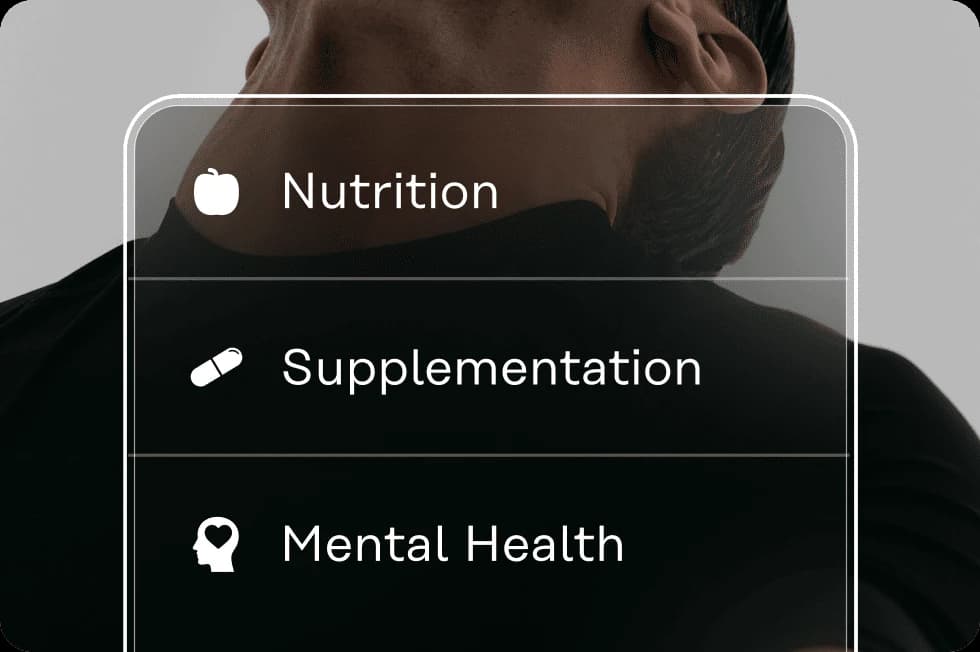
Improve and re-test
Track then retest within 3-6 months to validate your progress, see which actions worked, and continuously optimize your health for better healthspan
Whats happening biologically
Testosterone production peaks during deep sleep. When deep sleep drops below optimal, testosterone suffers. Blood tests measure total testosterone, free testosterone, and SHBG to reveal not just how much testosterone you're producing, but how much is actually bioavailable to your tissues.
Free Testosterone: Your bioavailable hormone
Total testosterone measures all testosterone in your blood, but most of it is bound to proteins and biologically inactive. Free testosterone measures the unbound fraction that's actually available to enter cells and exert effects. When deep sleep drops, total testosterone production declines. Meanwhile, SHBG (sex hormone binding globulin) often rises, binding even more of what little testosterone you produce.
When free testosterone drops low, your cells aren't receiving enough hormonal signal. Your libido disappears because your brain and reproductive tissues need testosterone to function. You work out but can't build muscle like you used to because muscle protein synthesis requires testosterone signaling. Fat accumulates around your midsection because testosterone normally helps regulate fat distribution. You feel flat and unmotivated because testosterone influences mood, drive, and energy beyond just physical effects.
Key insight: You can have low-normal total testosterone but very low free testosterone. The amount bound to SHBG determines what's actually available. Testing both reveals whether the problem is production, binding, or both.
Bottom line: Testosterone status reveals how sleep quality, hormone production, binding proteins, and tissue availability work together. At Lucis, we measure testosterone, free testosterone, SHBG, and estradiol. Not just whether you're low, but whether your hormone levels are optimized for muscle, energy, and drive.