Training more, performing less
What your body is trying to tell you
Sounds familiar ?
Even if it can seem normal, these needs to be looked at
Overtraining without recovery is crushing your performance. I'm training harder than ever but my performance is getting worse. I'm constantly sore, catching every cold.
Signals we commonly see when measuring
Your pattern, at a glance
HRV declining 3 months straight · Resting heart rate elevated (+8 bpm)
High-intensity training 6-7 days/week
Cortisol ↑ · CRP ↑ · Creatine kinase ↑ · Testosterone ↓ · DHEA-S ↓ · WBC ↓

How it works
Measure your body systems
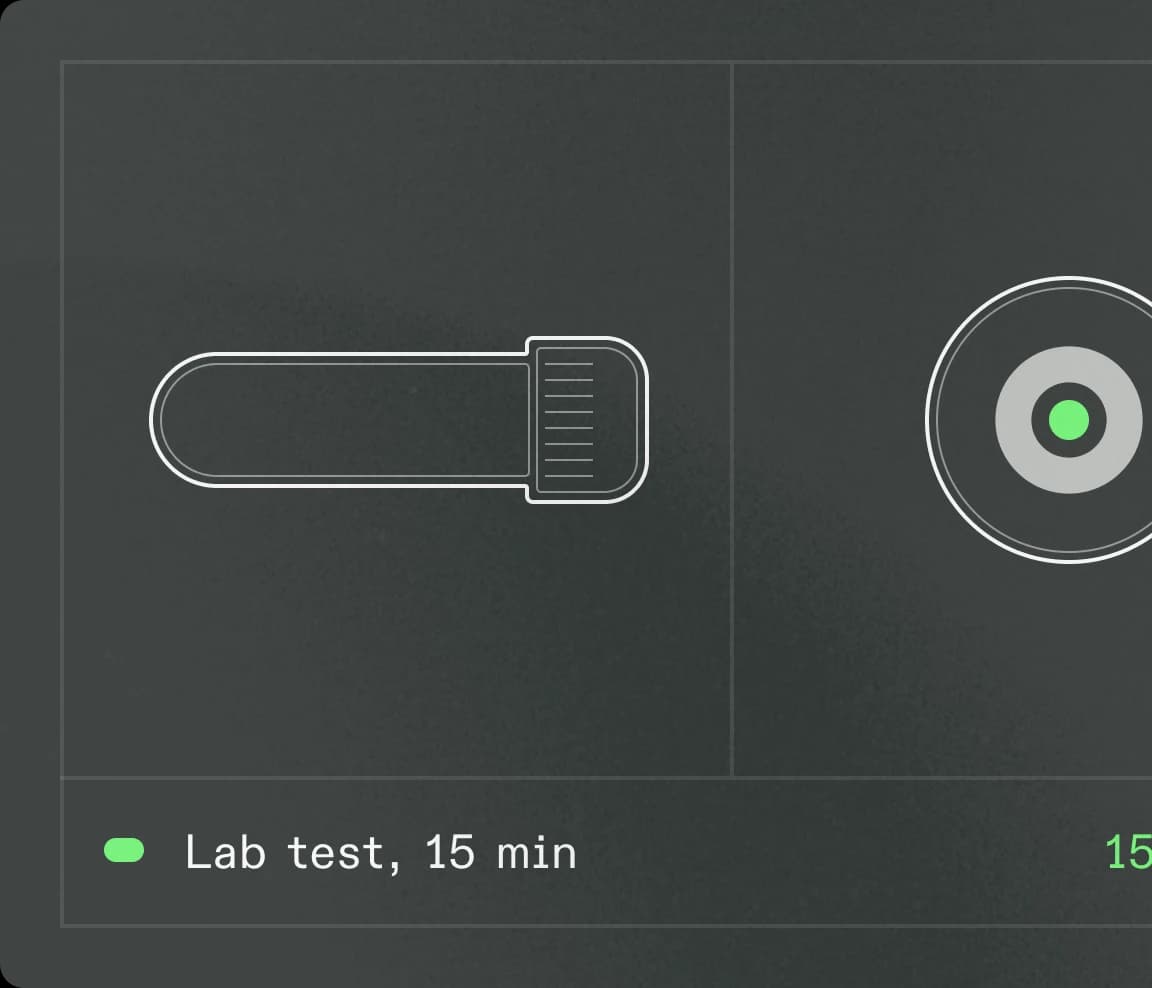
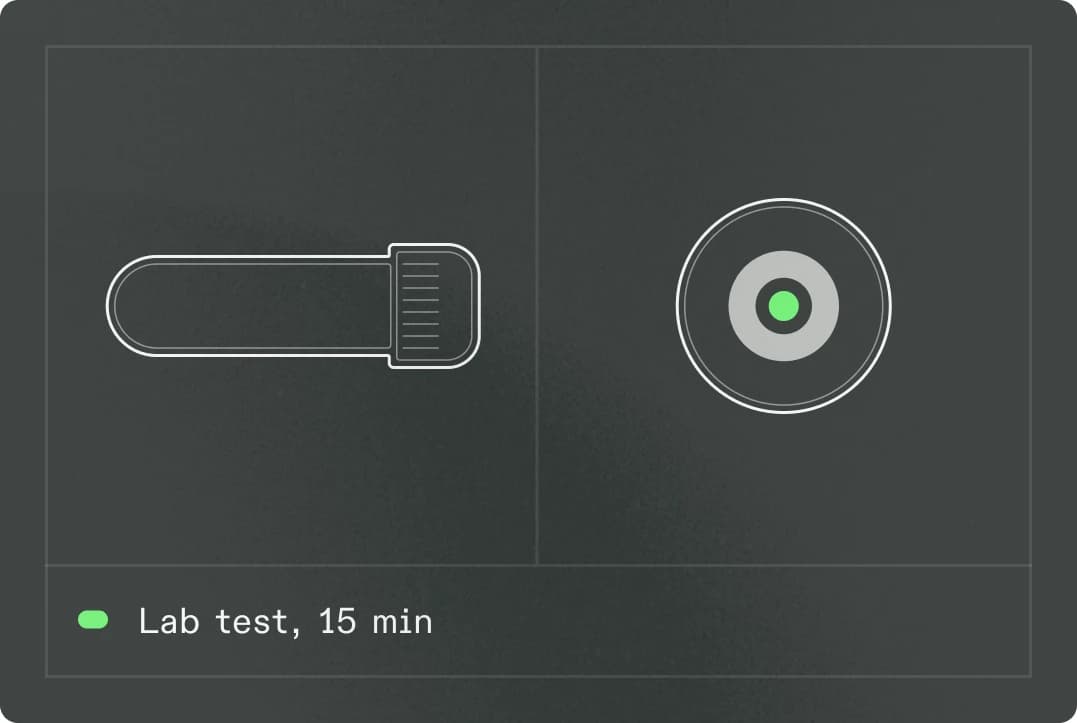
Through a comprehensive blood draw in one of our partner labs, we measure 60+ to 110+ biomarkers across body systems and reveal exactly where you stand for each

Get personalized actions
Your biomarkers unlock a personalized protocol with evidence-based actions tailored to your exact health data for measurable outcomes
Improve and re-test
Track then retest within 3-6 months to validate your progress, see which actions worked, and continuously optimize your health for better healthspan

Whats happening biologically
High-intensity training 6-7 days/week keeps stress hormones chronically elevated, suppressing recovery hormones. Blood tests reveal overtraining biomarkers that explain why training harder is making you perform worse.
Creatine Kinase: Your muscle breakdown alarm
Creatine kinase is an enzyme released when muscle fibers break down during exercise. But when you train intensely every day without rest, CK stays chronically elevated. Think of it like tearing down a building before repairs can finish. Initially you progress, but eventually everything breaks down. Elevated CK means muscles break down faster than they rebuild, impairing strength gains and weakening performance capacity.
When CK stays high, it creates a cascade of overtraining markers. Cortisol (stress hormone) rises because your body can't shift into repair mode between sessions. CRP (inflammation marker) stays elevated because muscle damage triggers persistent immune responses. Testosterone drops because chronic breakdown and high cortisol suppress anabolic hormone production. DHEA-S (resilience hormone) declines, leaving you without the buffer to handle training stress. Your performance gets worse because your body is breaking down faster than it can rebuild.
Key insight: Muscle growth happens during recovery, not training. When CK can't normalize between sessions, damage accumulates. You're creating breakdown without allowing rebuild. The biomarkers reveal you're overtrained before performance collapses completely.
Bottom line: Elevated CK reveals how muscle damage, recovery capacity, inflammation, and hormonal balance interact. At Lucis, we measure CK, cortisol, CRP, testosterone, DHEA-S, and WBC. Not just whether you're sore, but whether your training volume exceeds your body's capacity to adapt.