Offer Page Hero Background

Your health, years from now, starts with what you do today.

Understand what your body needs, and know exactly where to start.

Lucis Care

£33.25

/month
Billed at £399 annually
Blood ✓ Urine
2 tests/year ✓ 100+ markers first test, 60 markers second test
11 body systems
Wearable integration

All markers

Check out the lists of analyzed biomarkers, and your resulting personalized guidance.

grid
01
First wellness assessment

First wellness assessment

A first comprehensive test with over 100+ biomarkers analyzed.
100+ analyzed biomarkers
grid
02

Personalized action plan

Tailored recommendations based on your results to help improve your health.
5 pillars clearly defined
grid
03

Follow-up check

6 months after the first check, a second test to compare and track your progress.
60+ analyzed biomarkers
100+ full panel
60+ follow-up panel
Inflammation & immunity13
Heart & cholesterol20
Blood sugar & metabolism10
Liver & digestion13
Kidneys16
Minerals & hydration5
Hormones18
Blood cells & iron15
Vitamins & antioxidants5
Muscle, bone & recovery4
Whole-body scores1

Systemic Immune Inflammation Index (SII)

plus
Systemic Immune Inflammation Index is a headcount score for key immune cells. Imagine three teams on patrol in a city: first responders, cleaners, and coordinators. SII counts how many of each team circulate in your blood at once. Platelets act like patch crews that help plug leaks. Neutrophils act like rapid responders to new challenges. Lymphocytes act like planners that guide longer term defense. The index looks at their combined numbers, not just one group. Very low values may suggest fewer patrols available when your body meets daily demands. Very high values may suggest constant high alert across many teams. A balanced SII means your protection teams stay ready without creating unnecessary strain.
SystemInflammation & immunity

NLR (Neutrophils/Lymphocytes)

plus
NLR is a ratio between two white blood cell teams. Picture a fire crew and a repair crew working on a city street. Neutrophils act like fast fire fighters that rush in first. Lymphocytes act like careful repair workers that rebuild and tidy up. Your body keeps a headcount of each group and compares them. If the fire crew far outnumbers the repair crew, your system stays in “fight” mode for longer. If the repair crew dominates, your response may be slower. A balanced NLR suggests your body handles short bursts of stress, then returns to calm and repair.
SystemInflammation & immunity

Monocytes

plus
Monocytes are a type of white blood cell. You can picture them as cleanup trucks and scouts moving through your blood. They patrol for trouble, pick up debris, and call in other immune cells when they find a problem. The bone marrow makes these cells and releases them into the bloodstream. They then enter tissues and change form to stay longer and clean deeper. Very low monocyte levels reduce this cleanup crew and patrol force. Very high levels mean many trucks stay on the road and can create more wear and tear in tissues. Balanced monocyte levels keep patrol, cleanup, and calm repair in a healthy rhythm.
SystemInflammation & immunity

Eosinophils

plus
Eosinophils are a type of white blood cell. You can imagine them as a special cleanup crew that patrols surfaces like the lungs and gut. They move through the blood and tissues and release tiny packets, like bags of tools, when they find a problem. These tools change the local area and call in other immune cells, like a team arriving at a work site. Eosinophils mainly work on unwelcome visitors and on irritants from the environment. When levels are low, this cleanup crew shows up less often in blood. When levels are high, the crew visits more often and stirs more activity. A balanced eosinophil headcount keeps responses controlled without extra strain on tissues.
SystemInflammation & immunity

Basophils

plus
Basophils are a small team of white blood cells that act like signal messengers during irritation or allergy-like reactions. Think of them as tiny packets that burst open to call in backup. The bone marrow makes these cells and releases them into the blood. Their granules hold substances such as histamine that open blood vessels and invite more immune cells to the area. When basophil numbers are very low, the body may have fewer of these quick alarm signals. When their numbers are very high, the alarms may feel too loud and frequent, which can increase swelling and irritation. A steady, balanced basophil count helps keep the body’s response to triggers controlled and efficient.
SystemInflammation & immunity

High-sensitivity CRP

plus
High-sensitivity CRP is your body’s smoke alarm for slow, hidden sparks. Imagine tiny fires smouldering in tissues that you cannot see or feel. hs-CRP measures how loudly these silent alarms ring in your bloodstream. Your liver makes this protein when your immune system senses irritation or tissue stress. If signals stay active, more hs-CRP alarms switch on and stay on. Very low levels mean your internal firefighters spot small sparks and calm them quickly. Higher levels mean more ongoing smoke and more alarms over time. When hs-CRP stays in balance, your immune system reacts fast when needed, then settles back down again and avoids staying on constant alert.
SystemInflammation & immunity

Lymphocytes

plus
Lymphocytes are white blood cells that act like security guards. They patrol your blood and tissues and watch for anything that does not belong. Each lymphocyte is one guard in this security team. The bone marrow and lymph tissues release these cells into the bloodstream. Some guards remember past invaders and react faster next time. Others mark invaders for attack or destroy abnormal cells directly. Very low levels mean there are fewer guards on patrol, so detection can slow. Very high levels mean many guards respond at once, which stresses the system. A balanced lymphocyte headcount keeps immune surveillance steady and controlled over time.
SystemInflammation & immunity

Neutrophils

plus
Neutrophils are white blood cells that act like rapid‑response cleaners in your bloodstream and tissues. Imagine a street cleaning team that rushes to any spill. Neutrophils move quickly to sites of injury or microbes and surround the problem. They grab and digest unwanted material, like a cleaner loading rubbish into a truck. They also release small chemical packets that signal other immune cells to join the cleanup. Very low levels mean this front‑line team is too small, so first responses slow down. Very high levels mean many cleaners patrol all the time, which can irritate nearby tissues. A balanced neutrophil count gives fast protection without too much wear and tear.
SystemInflammation & immunity

White Blood Cell (WBC) Count

plus
White Blood Cell (WBC) count is a headcount of your defender cells. Imagine your bloodstream as a city and white blood cells as security guards. They patrol the streets, watch for trouble, and clear away damaged cells. Your bone marrow makes these cells, then releases them into the blood. When the body senses a challenge, it sends out more guards or pulls some back. Too few guards means slower clean‑up and weaker day‑to‑day defence. Too many guards means constant tension in the streets and more wear on tissues. A balanced WBC count keeps patrols strong but calm, so repair, defence, and recovery stay in sync.
SystemInflammation & immunity

Lymphocytes %

plus
Lymphocytes % is the share of your white blood cells that are lymphocytes. Picture your immune system as a security team, with lymphocytes as the detectives. The percentage tells you how many detectives you have compared with all guards on duty. The body makes lymphocytes in lymph tissue and releases them into the blood, then clears and replaces them as needed. A low percentage suggests fewer detectives on patrol compared with other guards. A high percentage suggests many detectives focused on targeted checks. Balanced levels mean a steady team that spots threats, remembers past invaders, and keeps responses measured rather than too weak or too strong.
SystemInflammation & immunity

LMR (Lymphocytes/Monocytes)

plus
SystemInflammation & immunity

MHR (Monocytes/HDL)

plus
SystemInflammation & immunity

PLR (Platelets/Lymphocytes)

plus
SystemInflammation & immunity
Background
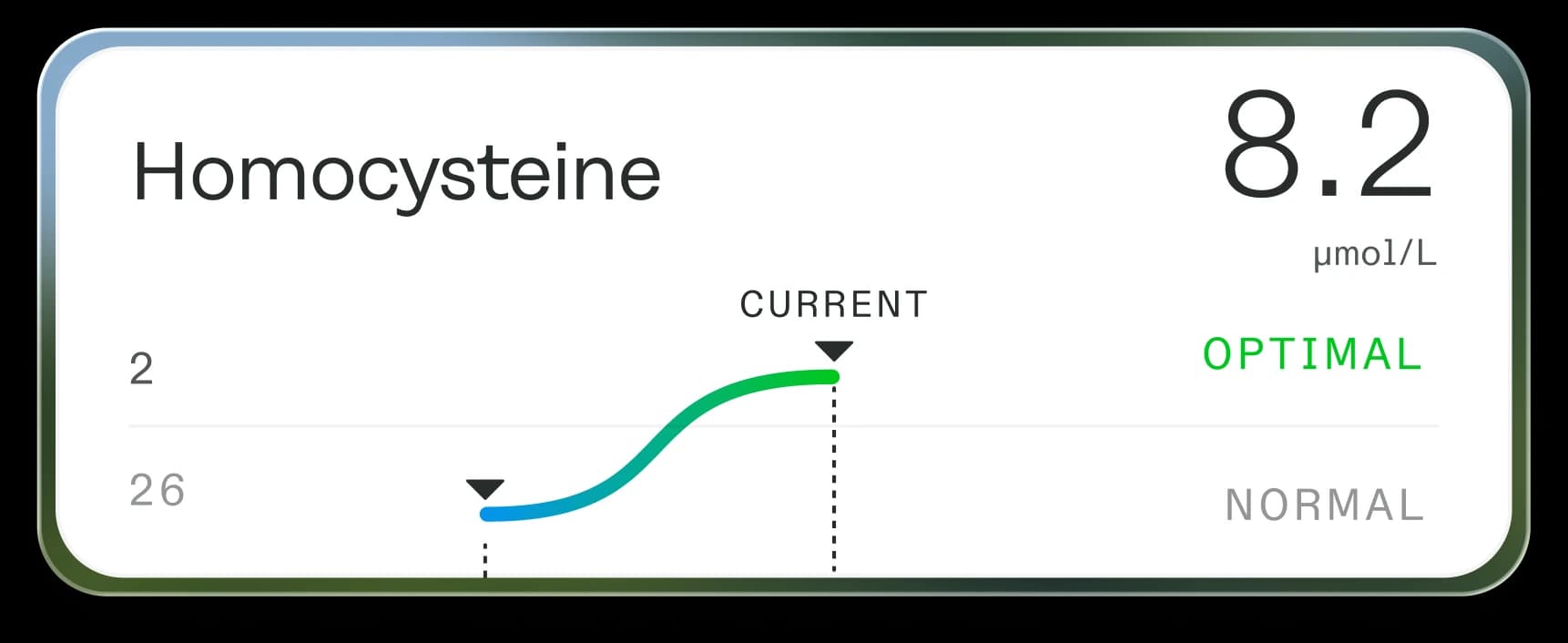
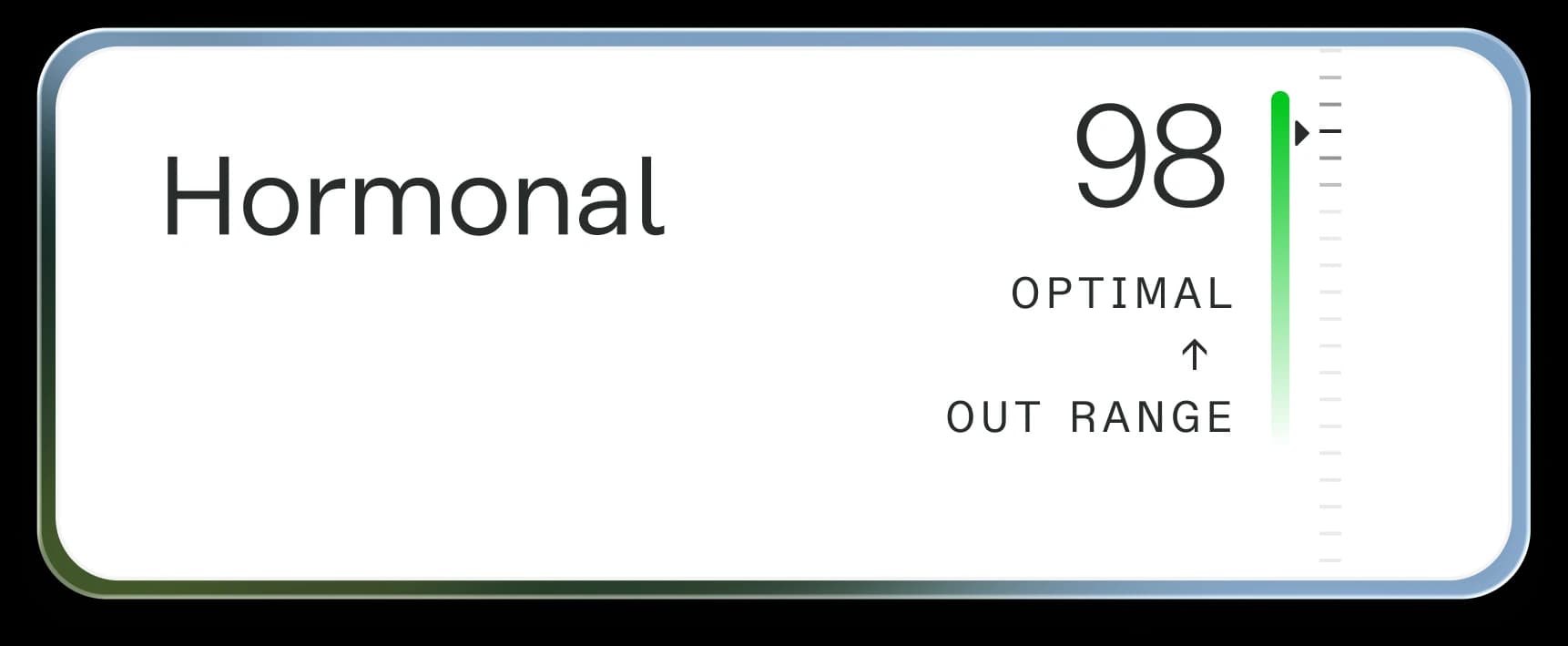
HomocysteineHormonal
AgeTreatScore

Know what to change, and how to start from day one.

Is my report ready?

Lucis Ball

Yes, I updated it from your last blood results and data gathered with your other sources

DISCOVERY #1

Marc, the discipline is paying off.

Your CRP dropped 34% since January while your daily steps held above 9,000. Sustained movement at that threshold is what triggers systemic inflammation suppression.
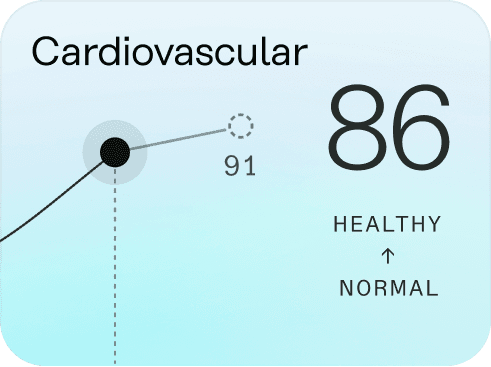
CardioMetabolic
Goal

Your weekly actions

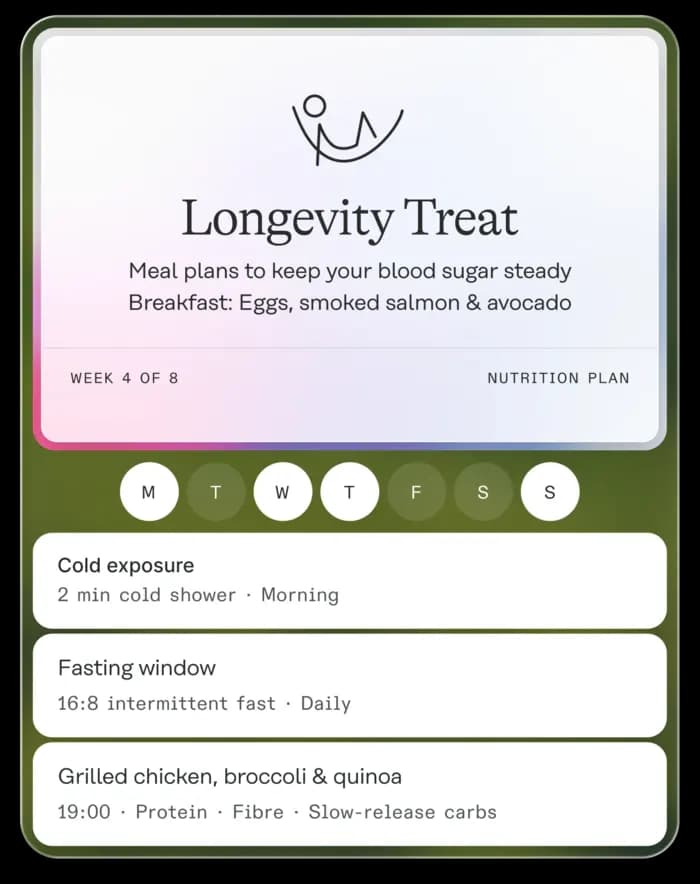
A protocol built around your results, your habits, and your goals. Recommendations grounded in what your body actually showed, updated every time you retest.

iPhone with actions

Discuss about it, anytime

A question at midnight. A doubt after dinner. Something you read and want to check against your results. Your companion knows your biology, your history, and your goals.

Your body has its own priorities. Test what matters to you.

Browse add-ons

Already a member? Open the marketplace

Find out what's really going on in your gut.GUT MICROBIOME PANEL
Find out what's really going on in your gut.

Find out what's really going on in your gut.

Your digestion, your immunity, and your energy all start here. This panel maps the diversity of your gut bacteria and shows you what's thriving, what's missing, and what to do about it.

Find out what's really going on in your gut.

This isn't about one test. It's about how you want to feel for the rest of your life.

© Lucis 2026. All rights reserved.